Determining breeding values for a calf only a few days old, at a higher reliability than for a cow that has calved four times, is now possible with CRV’s genomic testing. These tests provide information on breeding values for more than fifty traits, and give direct insight into A2A2 status, polledness, and hereditary defects. Parentage can also be verified through genomic testing.
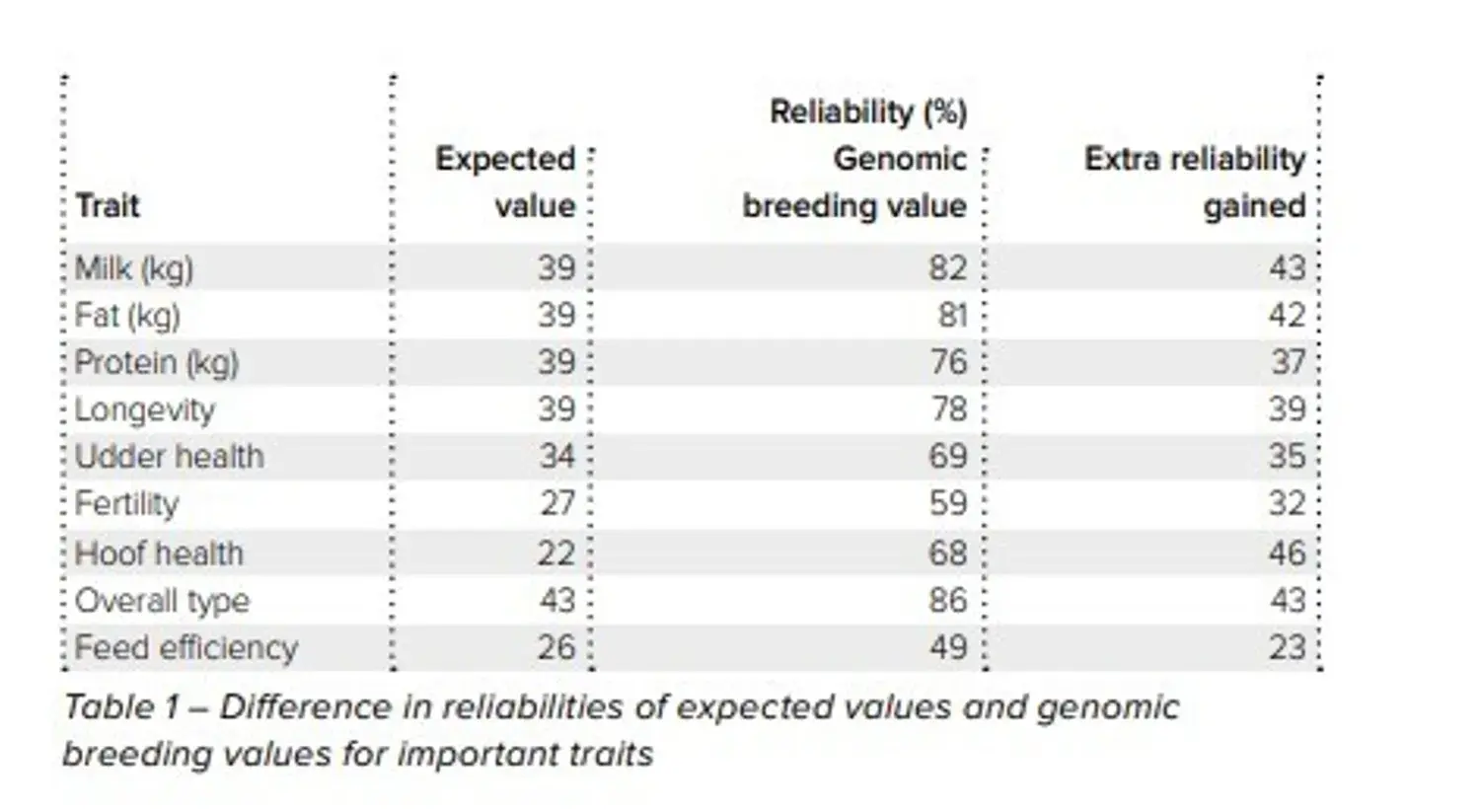
“Since genomic testing was introduced roughly fifteen years ago, reliability has increased significantly,” explains Jonas Perneel, information solutions specialist at CRV. The reliability of genomic breeding values now exceeds 80 percent for many traits. That is far higher than the reliability of traditional pedigree-based breeding values, also called parent averages. Table 1 shows the reliability of parent averages versus genomic breeding values for several key traits. “For most traits, genomic testing doubles the reliability of the breeding value,” Jonas emphasizes. “This means that farmers who use genomic breeding values can reliably select the animals that best match their breeding goals. Genomic testing also enables more precise mating decisions,” he adds.